Historic Downtown District Walking Tour Locations
Acworth’s Historic Downtown is the heartbeat of the city and has been built on a strong community spirit since 1860!
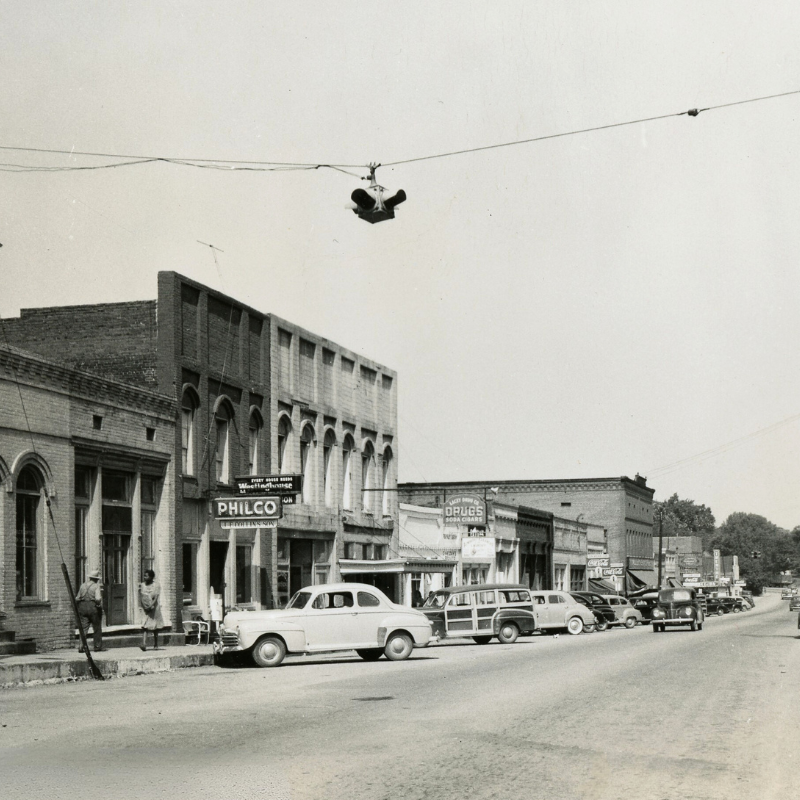
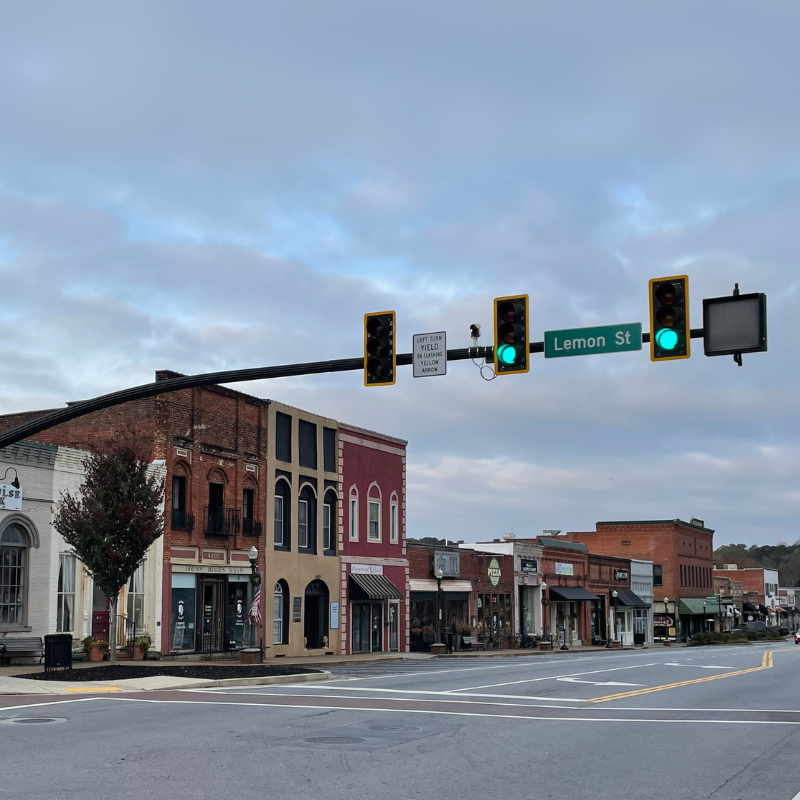
Historic Acworth Two Block
4801-4487 North Main St
Located on the National Register of Historic Places the Acworth Downtown Historic District's overall character is similar to small towns throughout Georgia. Main Street follows the late 1700s Cherokee Indian trading route that passed from Chattanooga to the Chattahoochee River in south Cobb County. It later became part of the Old Dixie Highway, following the same path as the trading route. Today it is Old U.S. Highway 41, replaced by U.S. Highway 41, or Cobb Parkway to the west of Acworth. The street remained a dirt road until it was paved in 1926. Commercial buildings in the district were mostly constructed between 1880 and 1920 and are one- and two-story attached and freestanding brick buildings. The district contains 33 contributing properties and is bisected east to west by the CSX Railroad (formerly the Louisville & Nashville Railroad). Lots in the district are generally 25 feet wide by 100 feet in length with buildings built out to the lot lines and are fronted by sidewalks. Commercial buildings in the district are one-, two-, and three-stories; have brick or concrete block bearing walls with brick veneer; have narrow front facades with long side facades; flat roofs; and large plate-glass display windows in the lower floor with one-over-one or multi-paned windows in upper floors. Most of the storefronts have recessed entrances and decorative brickwork and cornices.
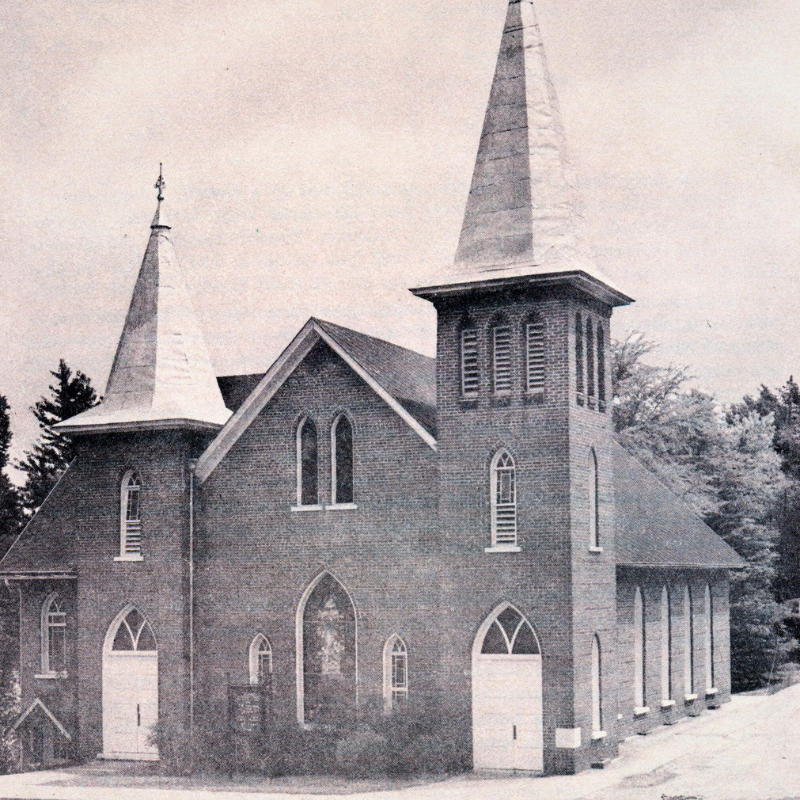
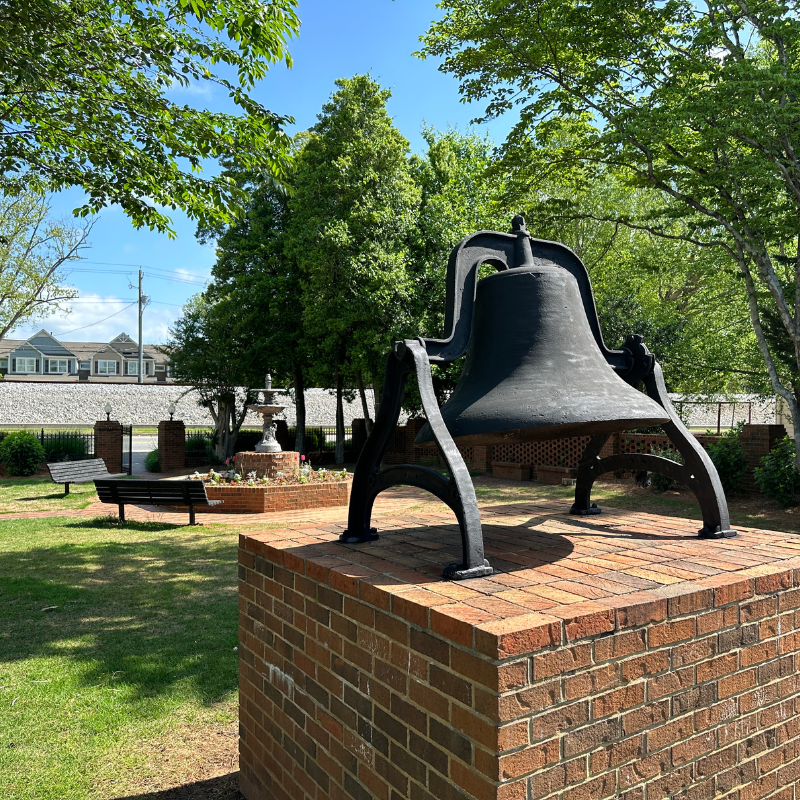
Acworth United Methodist Church
4901 North Main St
The Acworth Methodist Church was organized in 1858. The first church was constructed in 1859 on the corner of Academy Street and Dixie Avenue adjacent to the Acworth School. The land was donated to the church with the instruction that the second floor be reserved for a Masonic Lodge. The building served as a hospital during the Civil War. When it was razed for the construction of the new Acworth School in 1936, human bones, buttons and other Civil War relics were reportedly found. A second Methodist church was constructed at Main Street and Morningside Drive in 1905 at a cost of $3500. That structure survived until the 1980s. Frana Brown Park, named after a long-time City Clerk, now occupies its space and contains its cornerstone and bell. In 1957, having outgrown the building, the church acquired 7 acres from the Army Corps of Engineers and built a third church on Lake Acworth Drive.
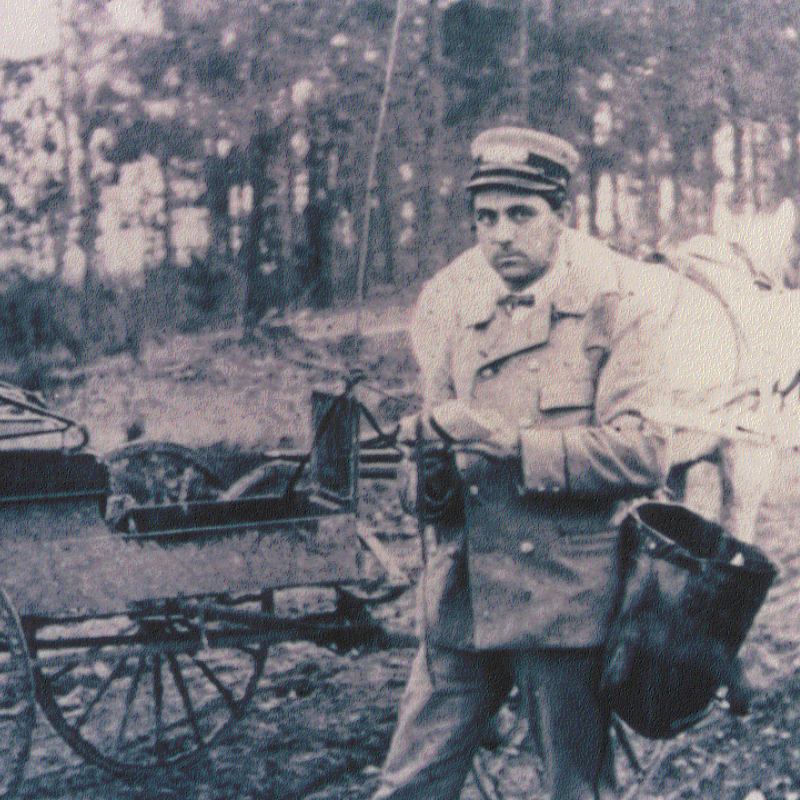
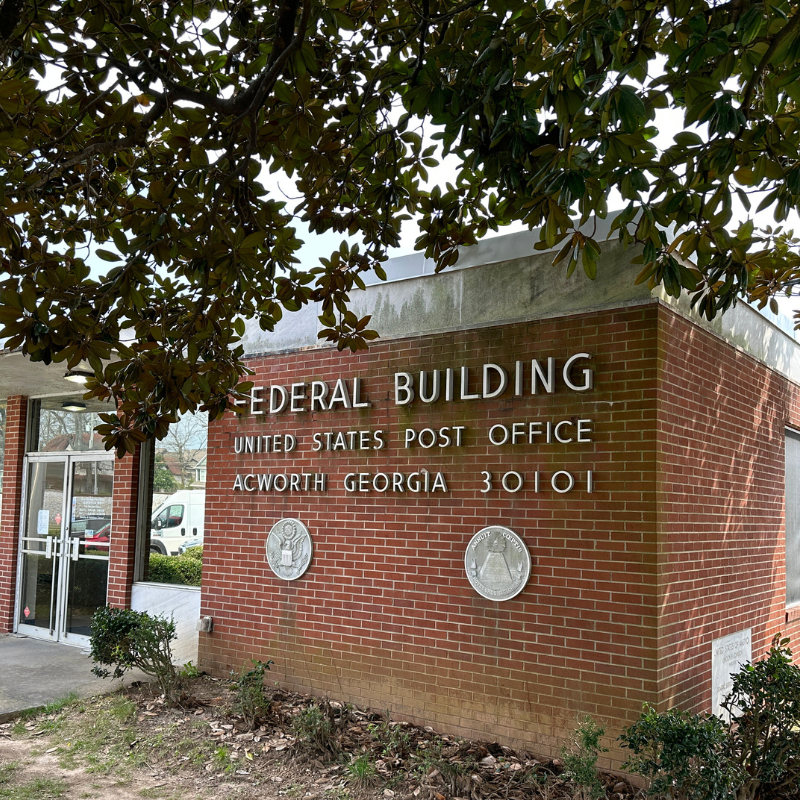
Acworth Post Office
4915 North Main St
The United States Post Office and Federal Building is an excellent example of an International-style federal building in a small town. The one-story brick building has an asymmetrical front facade with asymmetrically placed vertical single-pane windows and a recessed entrance on the right side of the facade. There is a plain marble frieze that runs on each side of the building. A non–historic alteration is an enclosed glass entranceway. The building is no longer leased or owned by the General Services Administration, but is still used as a United States Post Office. The building is a contributing property on the National Register of Historic Places Acworth Downtown Historic District.
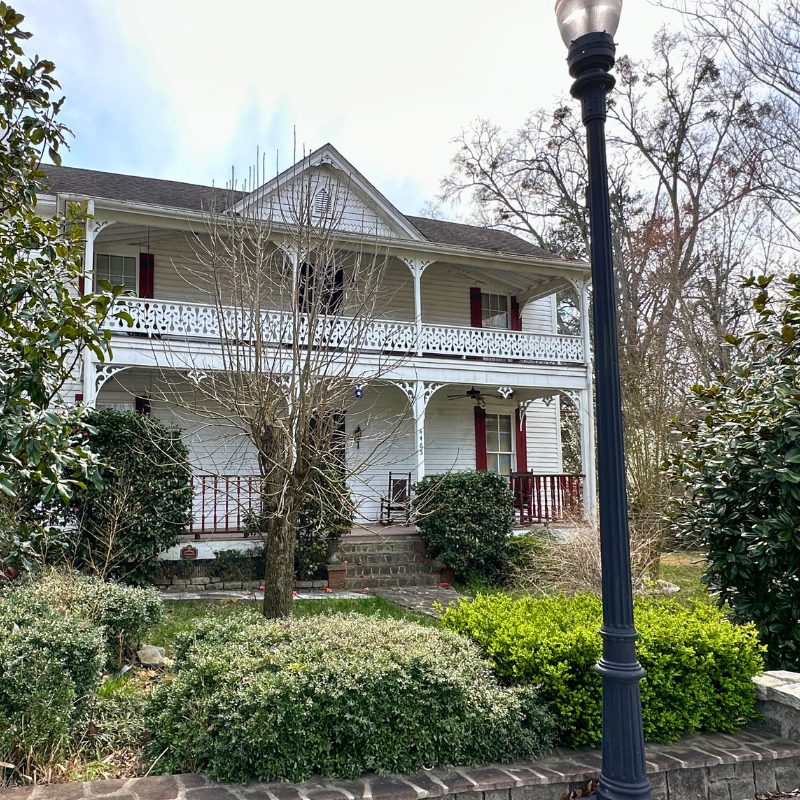
Noland House
4465 Carnes St
This two-story house dates back to the mid-1850s and is an example of the "Plantation Plain" style – one room deep and two stories high - with a shed addition. Builders in the Georgia Piedmont frequently included two-story porches, but the decorative sawn detailing is a Victorian era addition.
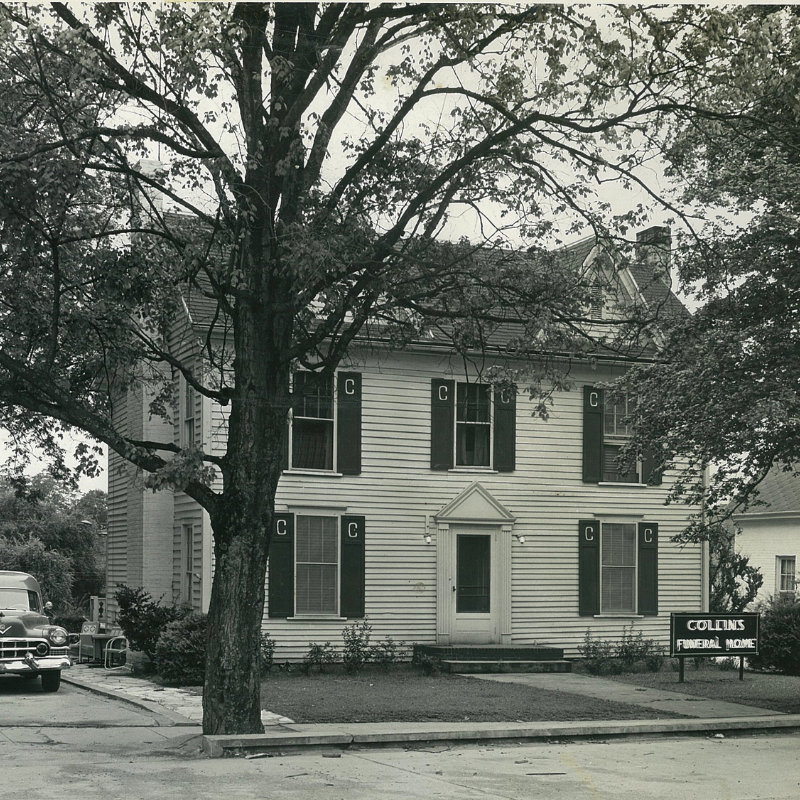
Collins Funeral Home
4947 North Main St
With its start in 1886 as a furniture store, the Collins Funeral Home has the distinction of being the oldest continuous business in Acworth. Two residential buildings, built in the City’s prosperous 1880s, were joined in the 1920s to house the funeral home; the furniture store remained in the business district. Prior to J.F. Collins’s expansion into funerals, caskets were made special order by chair and cabinet makers. The funeral home remained in the family for over a century.
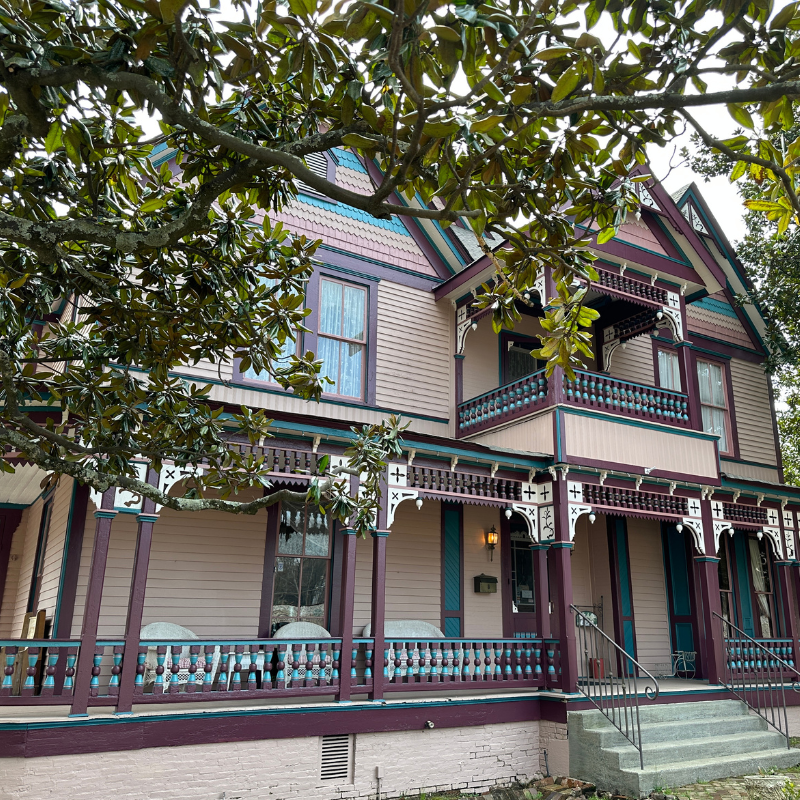
Elizabeth McMillian Lemon House
4965 North Main St
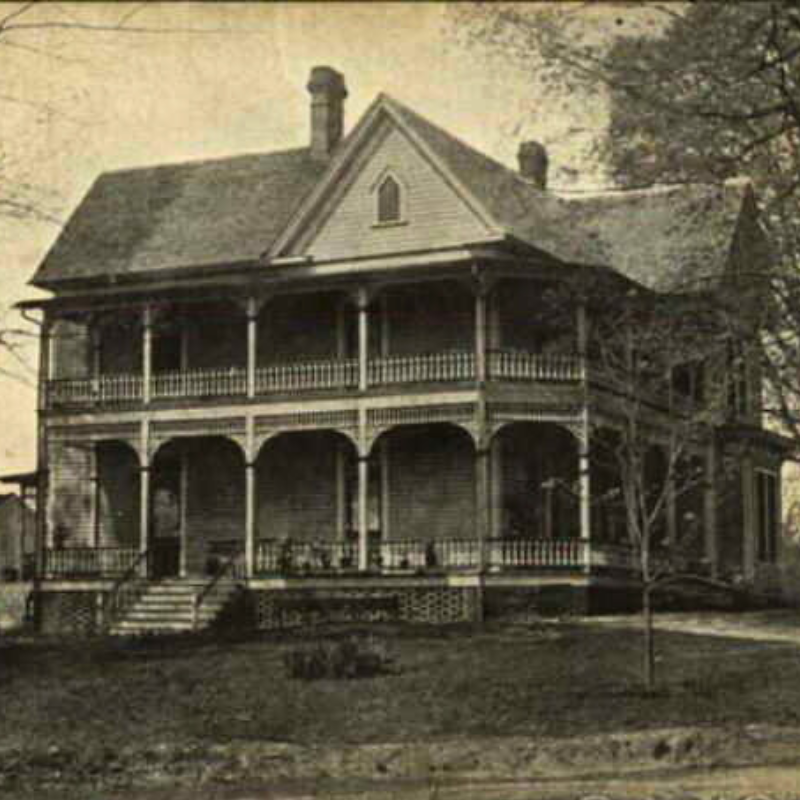
This stately Victorian house was a wedding gift for Elizabeth McMillan upon her marriage to Jesse Lemon in 1881. Jesse owned a cotton warehouse and a mercantile store and served in Acworth’s first government after the Civil War.It was built by her three McMillan brothers,"Wash", Robert, and James. Miss Lizzie, as Elizabeth Lemon was called, raised six children in this house, renting out upstairs bedrooms to boarders. One boarder was a young boy who died in an upstairs bedroom. Visitors to this house declare they have "seen" the ghost of a boy in knickers upstairs. Other visitors have "seen" Miss Lizzie in the parlor and on the front porch, where in life she spent her afternoons acknowledging passers-by. The home’s fanciful spindle work and interior staircase featuring carved petit-four laced treads attest to his and the town’s prosperity during the Victorian era.
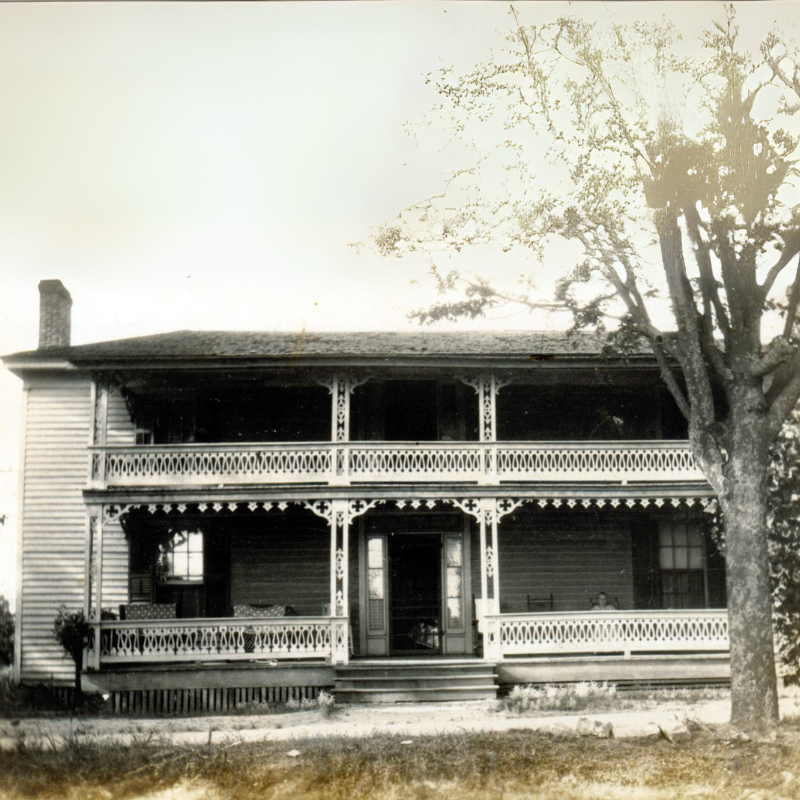
McEver House
4989 North Main St
Built in the 1840s, the home style is a type of I-house known as Plantation Plain. An I-house is two stories high, two rooms wide, and one room deep. Plantation Plain is further elaborated with stylistic detailing and varying porches, chimneys, and rearward extensions. The McEver House was used as a field hospital by Union troops during the Civil War and was spared destruction.
Armstrong House
5001 North Main St
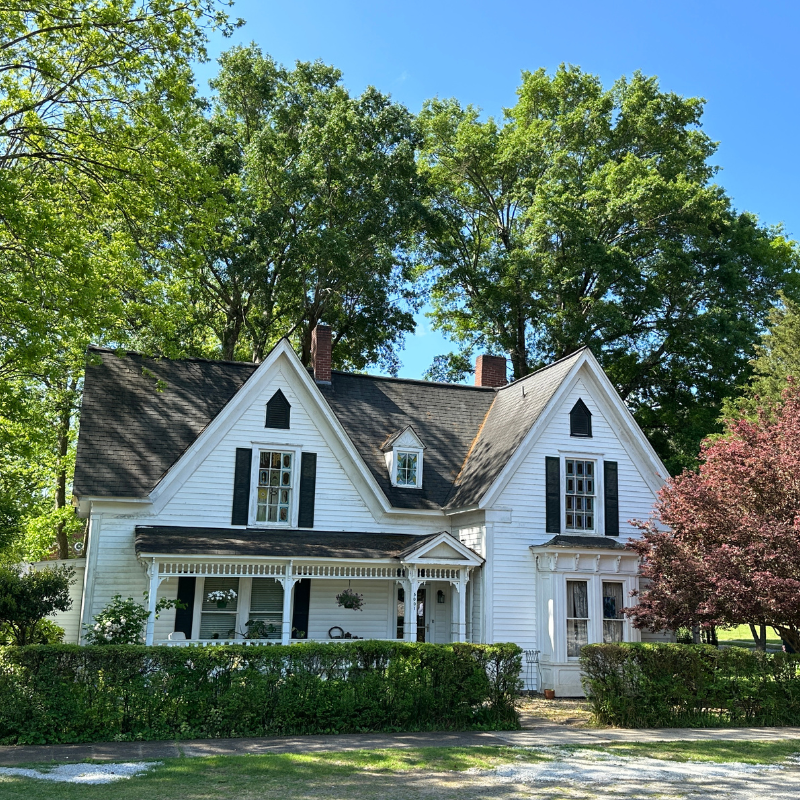
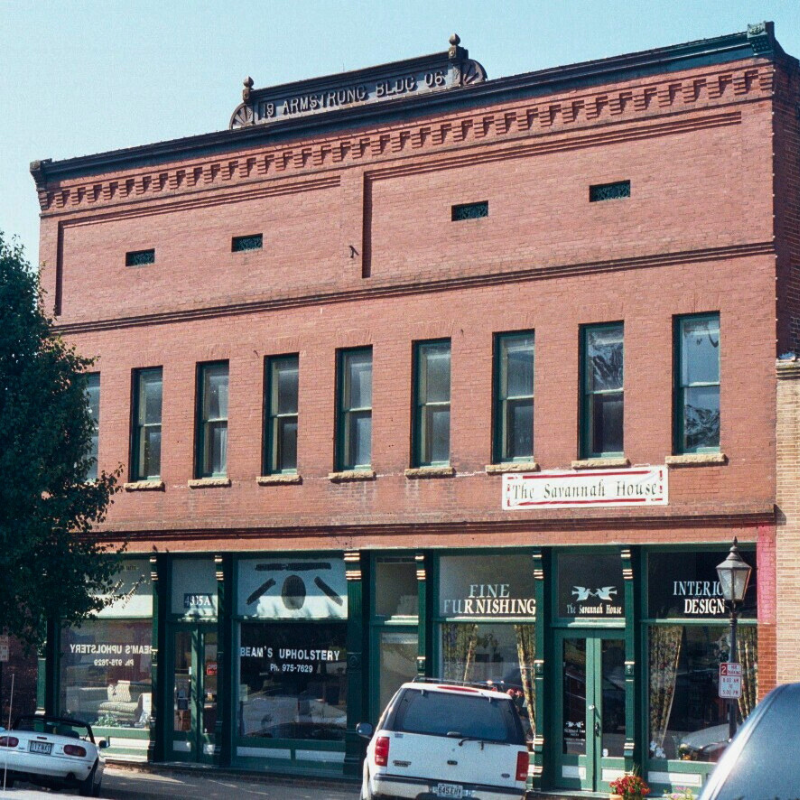
Carpenter and banker John Armstrong (1842-1921) built this Gothic Revival house prior to the turn of the 20th century as his personal residence. Armstrong is credited with building several large homes along Main Street, but this is the only one remaining. The Armstrong Building, a brick commercial building bearing a metal nameplate stamped "Armstrong Building 1906", remains at Main and Dallas Streets and is in use today.
Acworth First Baptist Church
4583 Church St
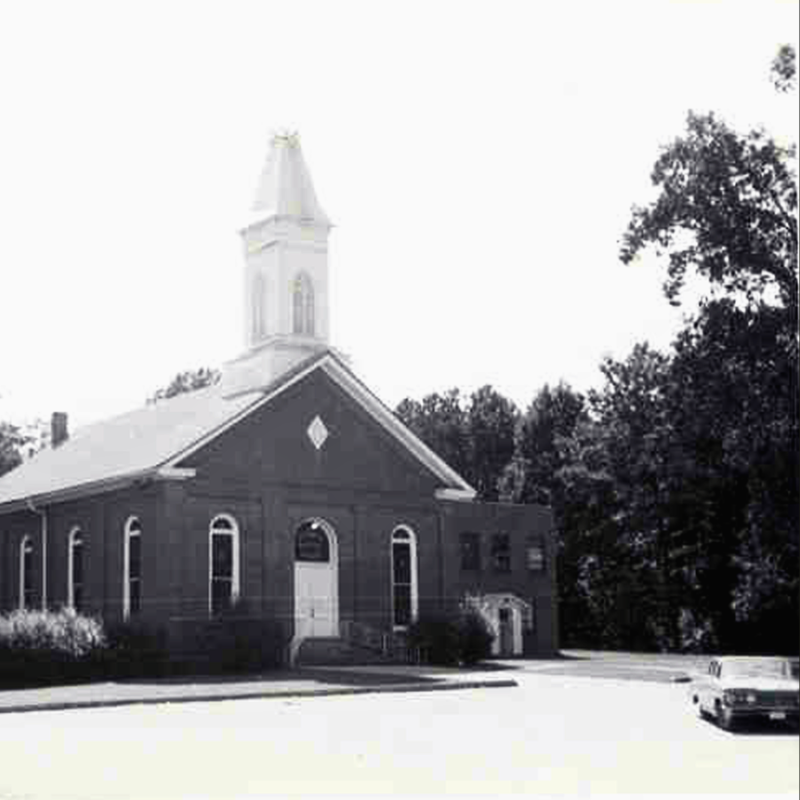
The First Baptist Church was built on this site in 1872, but little of the original structure is visible after it was renovated in 1940. The congregation dates back to 1840. The first church was constructed of logs and was located near Liberty Hill Cemetery. It was burned by Union Troops in 1864. In 1901Hannah Lemon gave the church its first pastorium and the stained-glass windows for the church auditorium. The balcony was added to the church’s interior about 1915.
Collins Avenue Historic District
Collins Ave
Located on the National Register of Historic Places, the Collins Avenue Historic District consists of several intact, historic residences along the northern portion ofCollins Avenue. The Collins Avenue Historic District is significant in the area of architecture for its good examples of residential resources built from the mid-19th to the early 20th century. The district contains examples of common house types and styles constructed in Georgia during the mid-19th through early 20th centuries as identified in Georgia's Living Places: Historic Houses in Their Landscaped Settings. The significant types represented within the district include central-hall, Queen Anne cottage, New South cottage, New South house, and bungalow. The significant styles represented within the district include Folk Victorian and Craftsman. The collection of resources within the district represents over 80 years of residential development in the district from the Collins House, a c.1840 central hall-type house, to theMcCall House, a c.1906 New South cottage with Folk Victorian detailing, and finally the collection of four 1928 Craftsman bungalows. The Collins Avenue Historic District is significant in the area of architecture and women's history for its association with Leila Ross Wilburn (1885-1967), an Atlanta-based architect. Two houses within the district, the Kienel House at 4652 Collins Avenue and the Louden House at 4662Collins Avenue, are based on the combined designs of patterns numbered 354 and 355 from Wilburn's pattern book, Ideal Homes of Today.
Acworth Presbyterian Church
4561 Church St
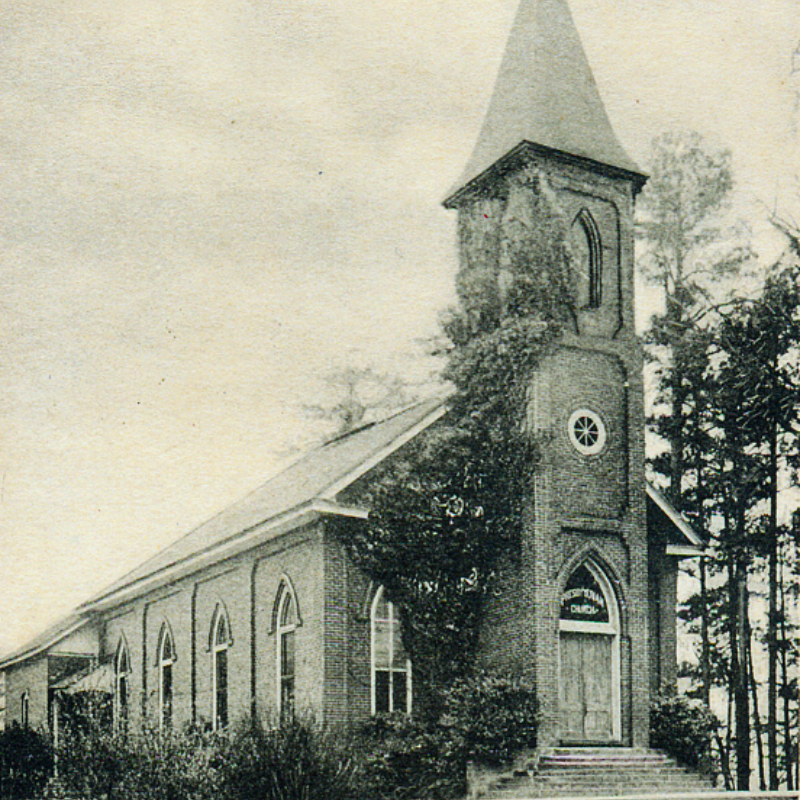
The Acworth Presbyterian Church was established in 1870 as a mission from the Mars Hill Presbyterian Church. Thirty-four members were dispatched to start the Acworth Church, and Mars Hill provided a joint minister until 1956. Smith Lemon donated the property, and together with his brother James Lile, supervised the construction of the church building in 1875. TheChurch featuresstained glass windows, Gothic arches, and intricate brickwork are features of the brickedifice. Many of Acworth’s pioneer families were among the charter members. The 2011 remake ofthemovie‘Footloose’wasfilmed in the church. Originally set in a fictional Tennessee town because they originally planned to film in Tennessee. However, Georgia ended up winning the filming location and the fictional town in‘Footloose’became Bormont, Georgia.
Awtrey Guest House
4468 Dallas St
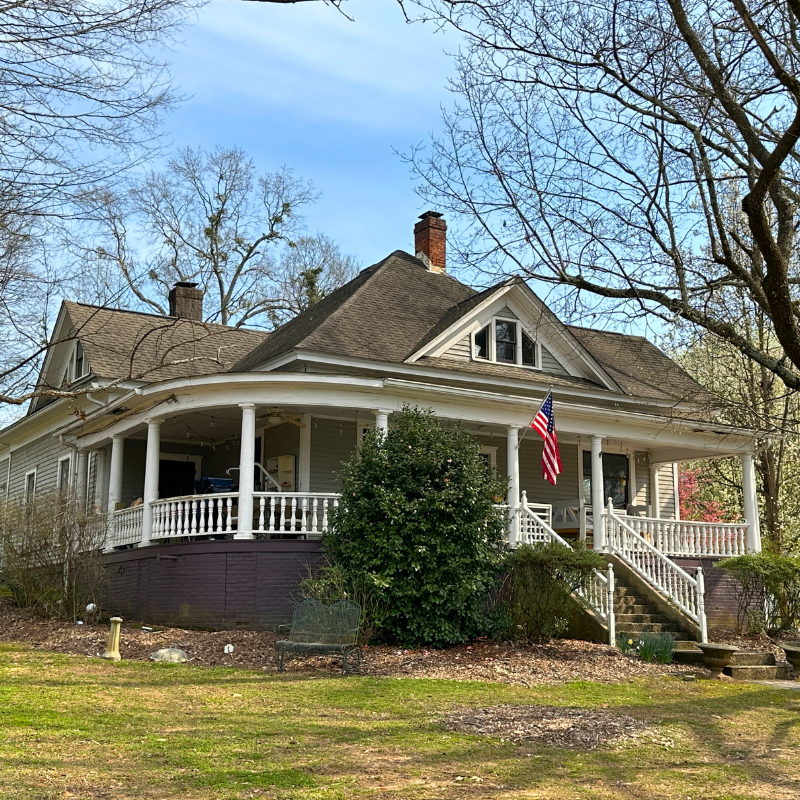
This Queen Anne shingle style house was built in the 1890s and served as a guesthouse for the Orlando Awtrey estate. Awtrey owned Orlando Awtrey and Sons, was president of Acworth’s first cotton milland president of the Smith Lemon Banking Company. The original five-room house has been expanded, yet still retains the original doors, trim, floors, mantles, and stained glass. The house has a hipped roof and several gables, and features a bay window with stained glass. The front wrap-around porch features Tuscan columns and turned balustrade. The front facade windows are paired single paned with leaded transoms.
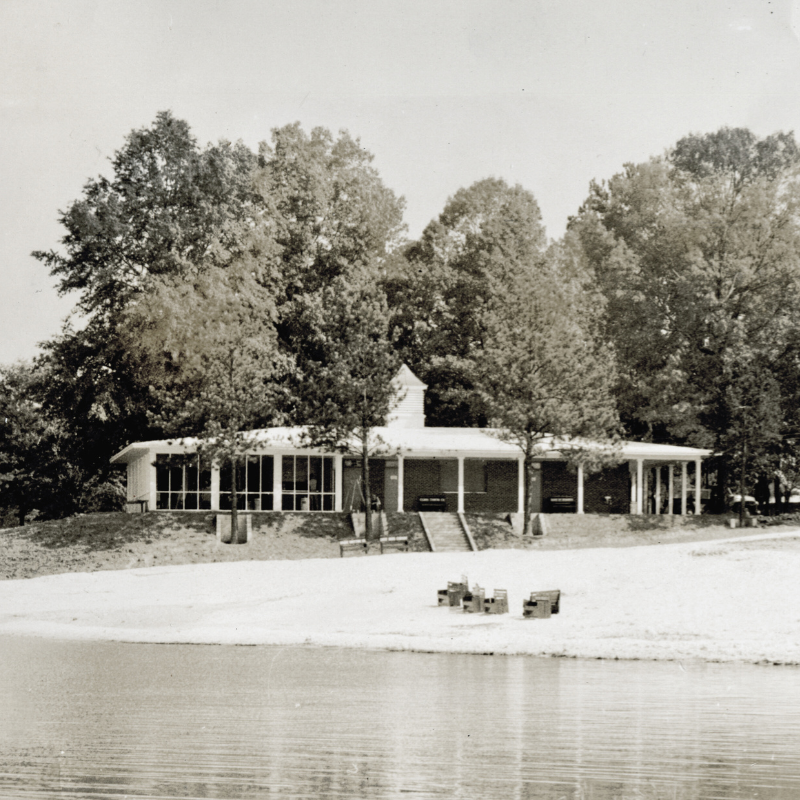
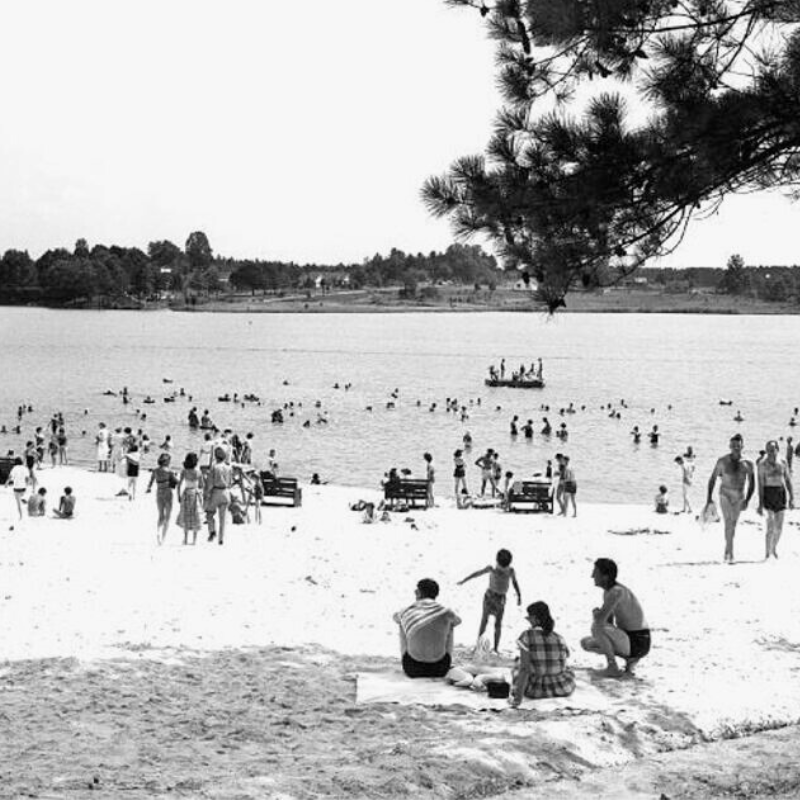
Acworth Beach and Bath House
4425 Beach St
After Lake Allatoona was completed in early 1950, Acworth leaders feared that the low Acworth end would become a muddy swamp. A delegation led by George H.McMillan traveled to Washington to lobby for a second “little dam” to create Lake Acworth. This was accomplished in July, 1950. The crescent-shaped beach was formed from 20 rail-car loads of sand, necessary to soften the red-clay shoreline. During a campaign visit to Acworth in 1950, GovernorHerman Talmadge pledged $25,000 to build a beach and bathhouse, but later approved $100,000 for the project. Acworth hired the Marietta firm Bothwell & Nash to design“a large, rustic beachhouse,” with an accompanying manmade beach. Governor Talmadge attended the beach and bathhouse dedication on August 12, 1953. Lake Acworth quickly became a popular retreat for area residents. After the construction of the bathhouse, a miniature golf course was installed on the beach, and a small train carried children around the complex. Pavilions and barbecue pits were available for picnics and family gatherings. In 1962, a social hall was built that was joined to the back of the bathhouse by a breezeway.In addition to hosting civic groups and private functions, the hall has been used by the city as a municipal court and polling place.
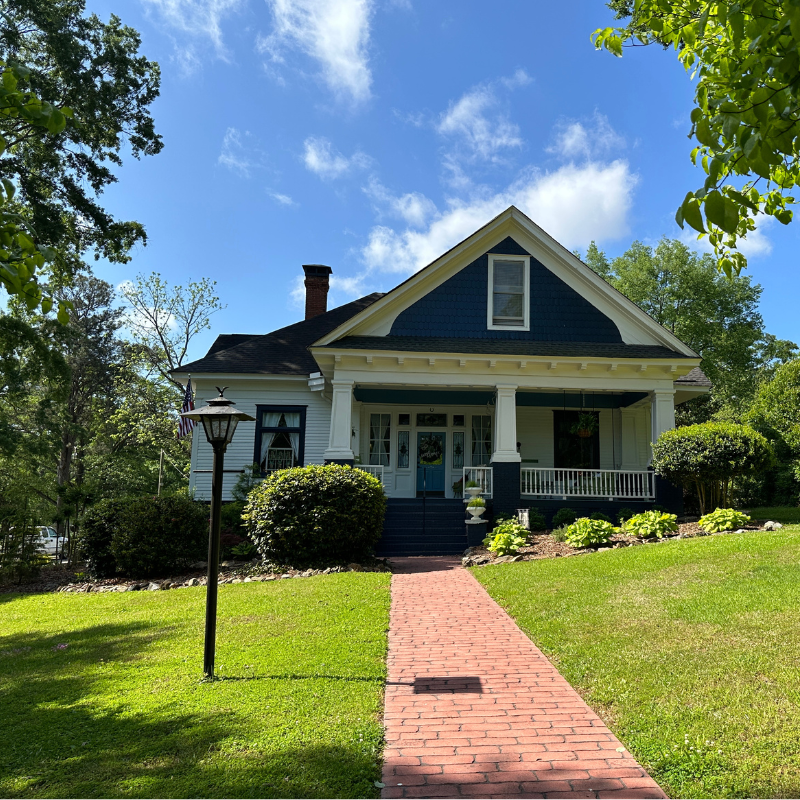
Honeymoon House
4496 Dallas St
This large Craftsman bungalow was built on the corner of Dallas Street and Seminole Drive by Lemon Awtrey in 1907 for his bride, Varah Hill. The original stained glass, decorative shingles, transom, and sidelights provide architectural interest. Lemon Awtrey was one of the first volunteer firemen, a president of the S. Lemon Banking Company, Mayor of Acworth, an Alderman, a charter member of the Acworth Men’s Club, and an Elder of Acworth Presbyterian Church. He was dedicated to the growth of Acworth. In the late 1930s under the financial pressures of the Great Depression, the Awtrey family was forced to develop their pastureland. Prior to the sale of the land, by lottery, the Awtreys had a grand barbecue on the property. This barbecue tradition continued during the wartime years when families would spontaneously gather on an empty Seminole lot for impromptu picnics and cookouts.
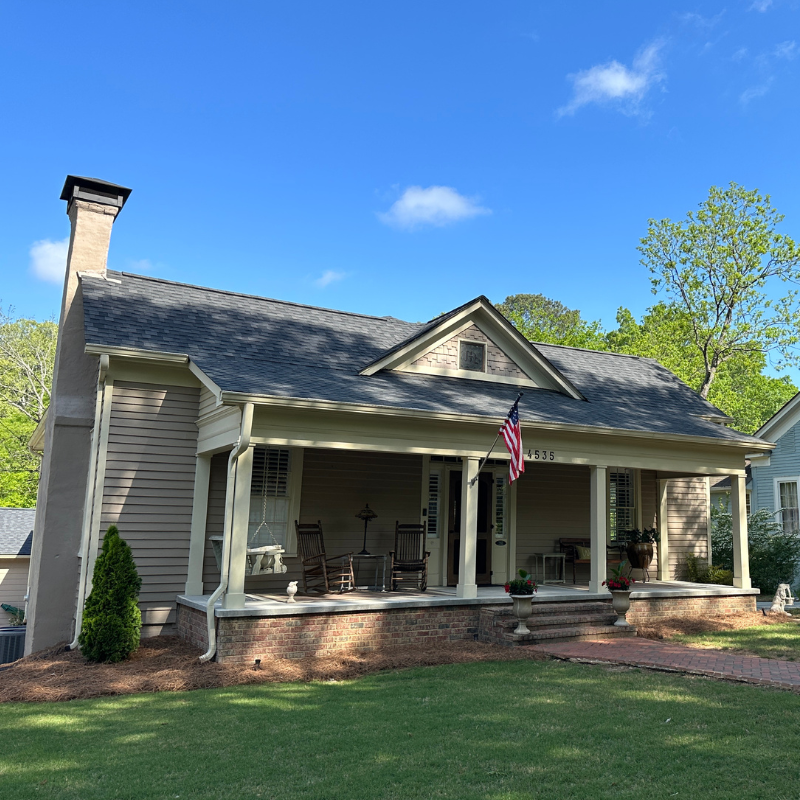
Carrie Dyer Women's Club
4535 Dallas St
This charming circa 1851 Central Hallway Cottage was originally 560square feet with 2 fireplaces. The Sanborn Fire Insurance Maps, Circa 1920-1932, show the home with an addition of 780 square feet. Acworth historians refer to this home as the Carrie Dyer home. The Carrie Dyer Women’s Club was established in Acworth in 1898originallyas the Calleopeans, but was renamed in 1901, upon Carrie Dyer’s death, to the Carrie Dyer Reading Club. Later, the club was named The Carrie Dyer Women’s Club. The Club purchased the home in 1910 and used the building as a clubhouse, meeting space for the girl scouts, and a public library. The Club operated a library in the home until it joined the Cobb County Marietta Public Library in 1963. Still active, the club holds the distinction of being the second-oldest women’s club in Georgia. The house was sold in 2018 to a private owner.
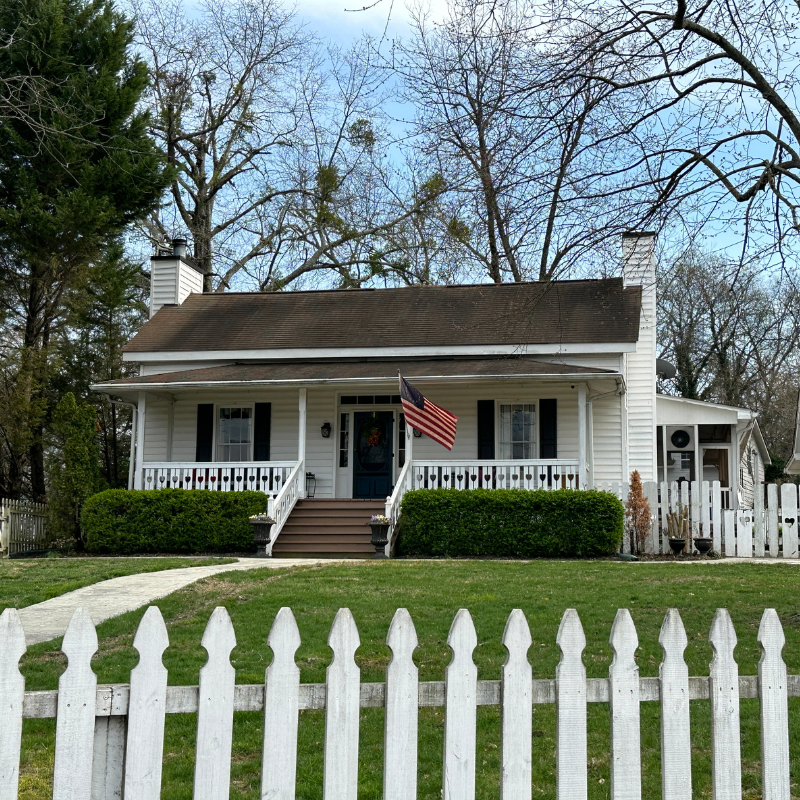
McClure House
4544 Dallas St
Originally a tenant farmhouse located on the James L. Lemon property, this house pre-dates the Civil War. It is actually two houses that were joined. The front two rooms were one house and were joined at a pantry-like area with the two rooms of a second house. Later additions have extended the house to its current size. Acworth Postmaster Ruth McClure lived here in the 1930s when mail was not delivered to home addresses, but was picked up at the Acworth Post Office.
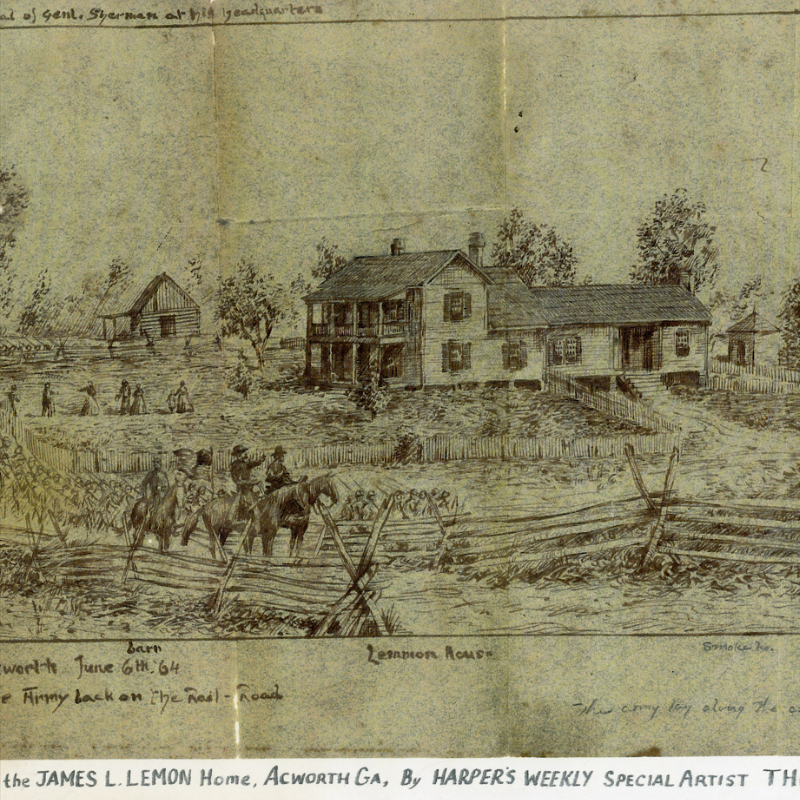
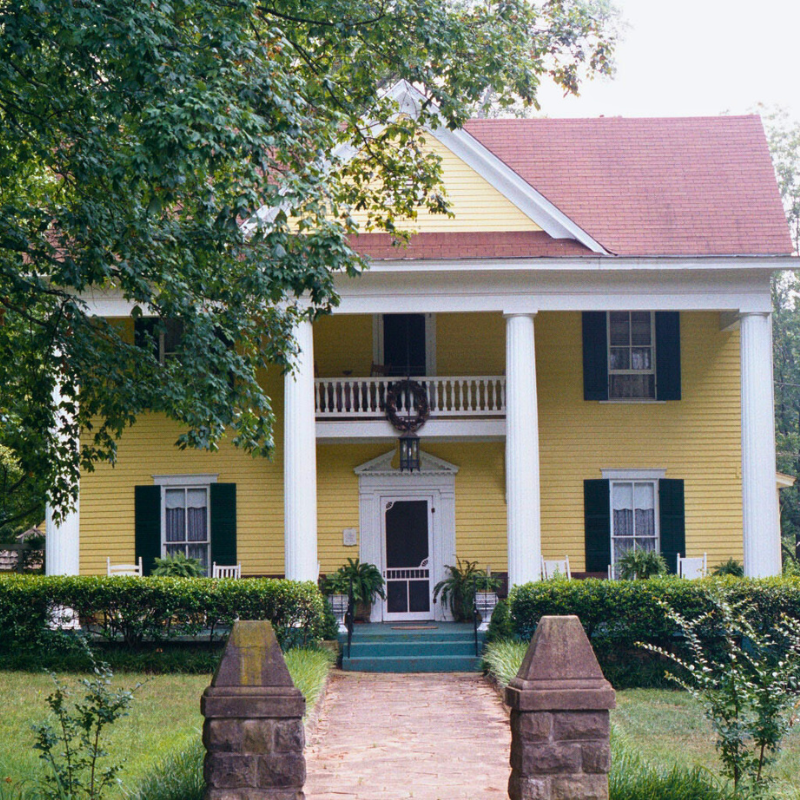
Lemon House
4375 Willis St
James Lile Lemon(1835-1907) moved as a child to Acworth from DeKalb County, Georgia in 1843. He built this Carolina-style modified Plantation Plain house in 1856. Constructed of heart pine, oak, and chestnut, the home features a ten-foot-wide grand hall, running the length of the house to increase cool air circulation during the hot summer. The original rear kitchen features six-inch tongue-and-groove heart pine walls and flooring. The house served as Sherman’s headquarters in June 1864. After the Battle of Kennesaw Mountain, Union troops used the house as a hospital and was spared the torch when Union troops burned Acworth in November 1864. After the Civil War, Lemon became a leader in Acworth civic and business affairs. In 1870 he and his brother, banker Smith Lemon, founded the Acworth Presbyterian Church. It is believed that Willis Street is named after a son who died in infancy in 1873. In 1995 the National Sons of Confederate Veterans posthumously awarded James Lile Lemon (18th Georgia Infantry CSA) the Confederate Medal of Honor, the only Georgian to be so honored.
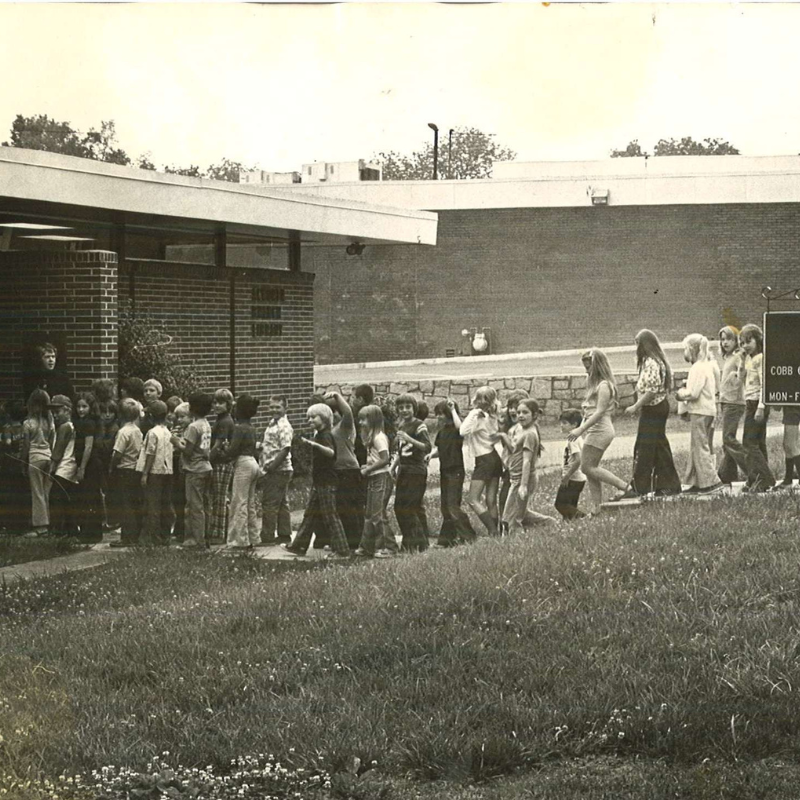
Old Acworth Library
4569 Dallas St
Built in 1966 and operating as a public library until 2019, the Acworth Branch Library is an excellent example of an International-style building in a small town. The rectangular building was built with Roman brick walls with slender metal supports holding up a wide, suspended, slab roof. The building has thin clear story windows under the roof. The front entrance has double aluminum doors with a single large glass pane in each with a glass transom above. The building is a contributing property on the National Register of Historic Places Acworth Downtown Historic District.
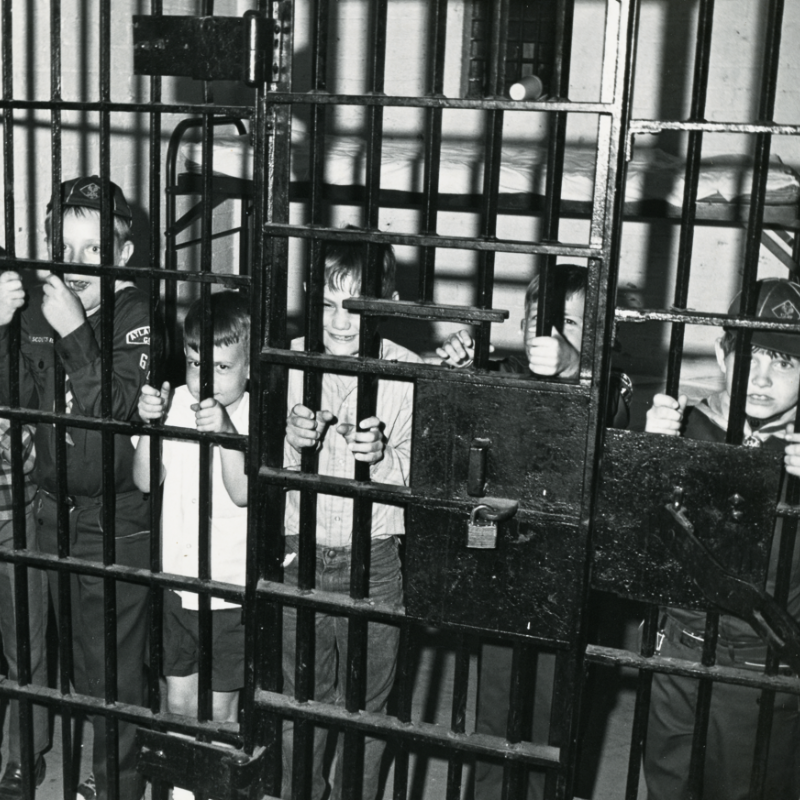
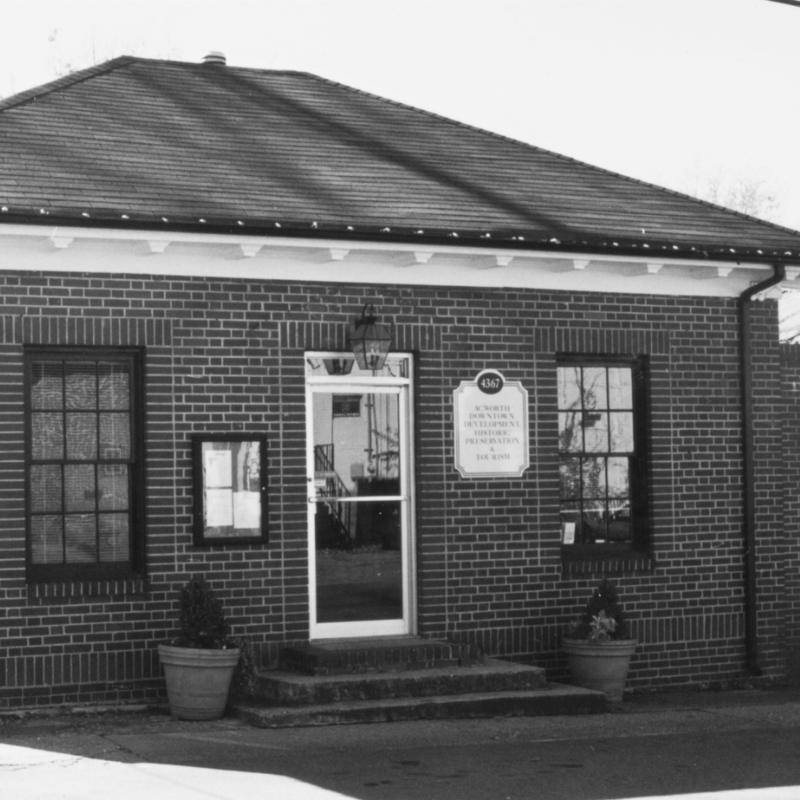
The Old Jail
4367 Center St
The Acworth Jail, known around town as the “Old Jail” was built in 1935 for $3,000 with assistance from the Federal Emergency Relief Administration. FERA was created in 1933 as part of President Franklin Delano Roosevelt’s New Deal in hopes of bringing the United States out of the Great Depression. The new“escape-proof” jail contained six cells in the rear of the building and housed the city council room at the front of the building. The building was in use as a jail facility until 1995 and still contains the original cells. The building is a contributing property on the National Register of Historic Places Acworth Downtown Historic District. The renovated building later housed the city offices of Downtown Development, Historic Preservation, and Tourism. The building is still owned by the city. Part of he 2014 movie Selma was filmed in the “Old Jail.”
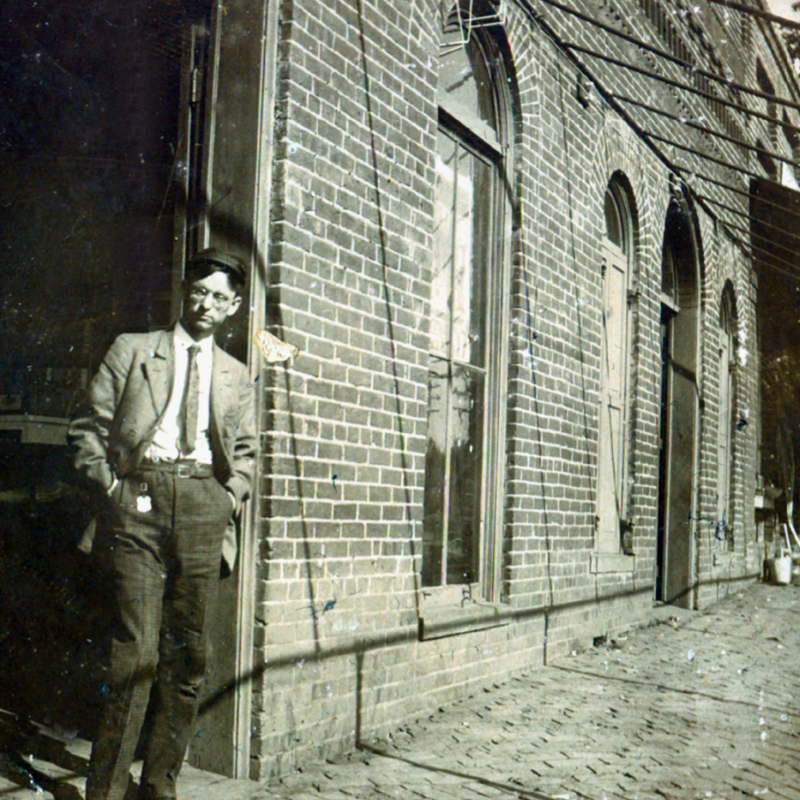
Fowler & Awtrey Corner
Southside/Northside Dr
The buildings fronting Southside Drive are known as Awtrey Corner for one of Acworth’s first merchants, Merrill C. Awtrey. He established a general merchandise store in 1848 and ran it with various partners over the years. The buildings standing now were built between 1870 and 1890 as the original platted commercial district. The buildings' facades have seen little change in the past 100 years. Over its early years, these buildings housed a buggy factory, a hardware store, a mortuary, and a stuffed toy manufacturer. The building with the front entrance diagonal to Northside/Southside Drive was built in 1894 and once housed the Kitchens & Williams hardware store. The two-story building next door facing the plaza was built in 1895 and housed a feed and grain store. Upstairs was the Colored Odd Fellows Hall.