Mill District Walking Tour Locations
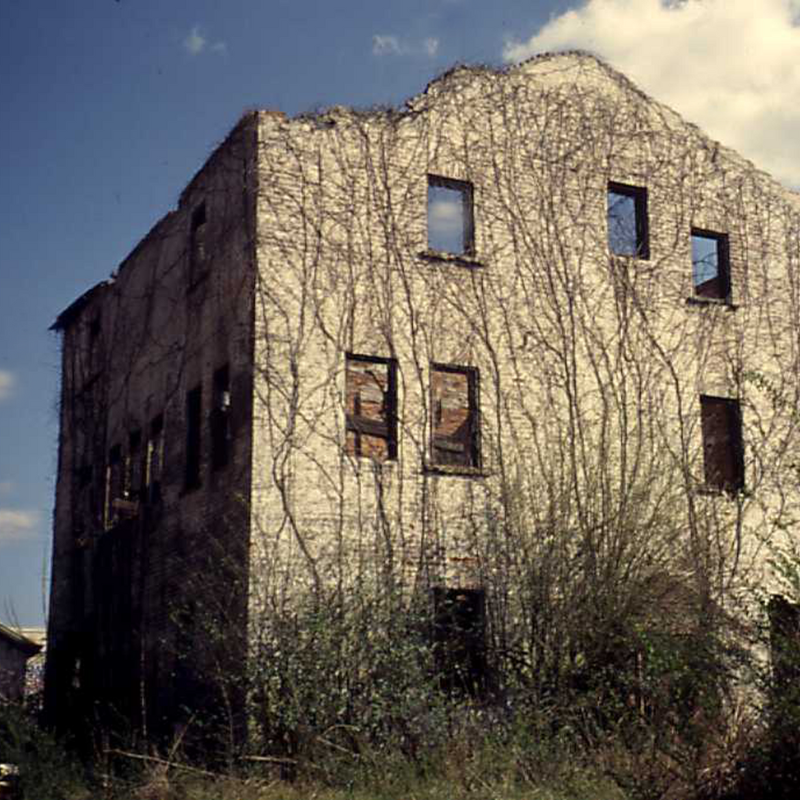
The Cowan Mill
4271 Southside Dr
In the late 1850s, John Cowan left Acworth and led a group to Montana with the goal of prospecting for gold. After months of fruitless efforts, in 1864 they reached a tributary of the Missouri River, where Cowan informed his men that the gulch was their last chance. They finally found a $20 gold nugget that day and worked the “Last Chance Gulch” for the next three years. This area later became Helena, Montana. Cowan returned to Acworth a wealthy man and partnered with Tarleton Moore to build the Moore and Cowan Mill in 1873 to manufacture high-quality Lynette Flour. The structure saw continuous use for 120 years until a fire in 1992. Operators included Acworth Hosiery Mills (1921), Elizabeth Bartlett Mills (1928), Cherokee Mills (1939), Rothschild Mills (1941), and Americo(1985). In 1998, the building was condemned, but the Acworth Historic Preservation Commission worked to save the structure. The building underwent extensive renovation in the early 2000s to restore it to its original beauty.
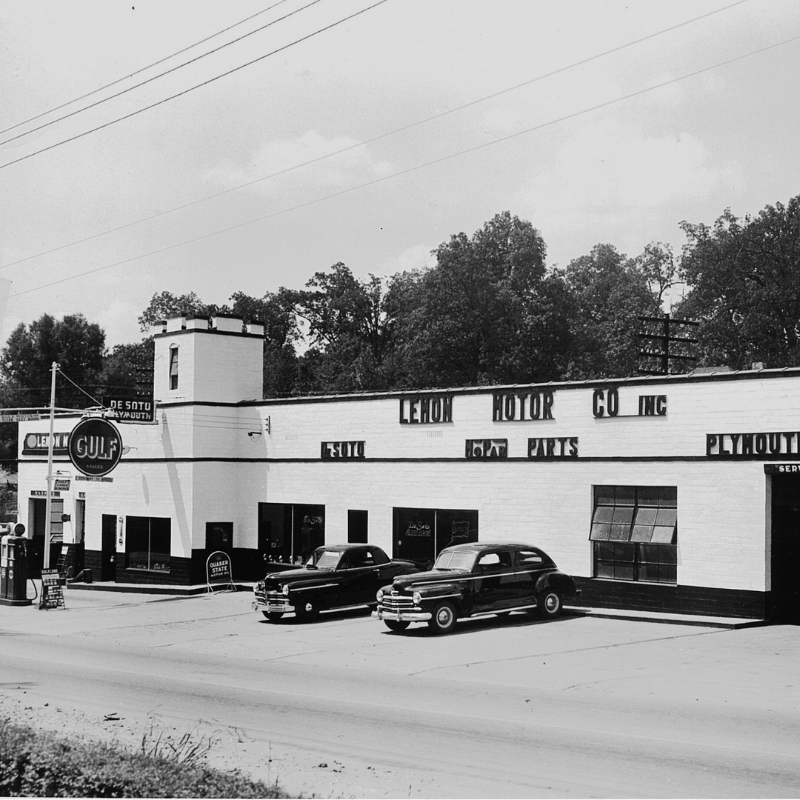
Lemon Motor Company
4648 South Main St
Built circa 1940s, the Lemon Motor Company was located at the corner of Main and Smith Street across the Dixie Highway from the Greyhound Bus Station and across Smith Street from the Pure Oil Gas Station. It was a DeSoto dealership with Gulf gasoline pumps out front. Unlike the impressive car dealership buildings of the 1920s and 1930s, the post-World War II automotive showrooms were of a smaller scale in modern, utilitarian buildings.
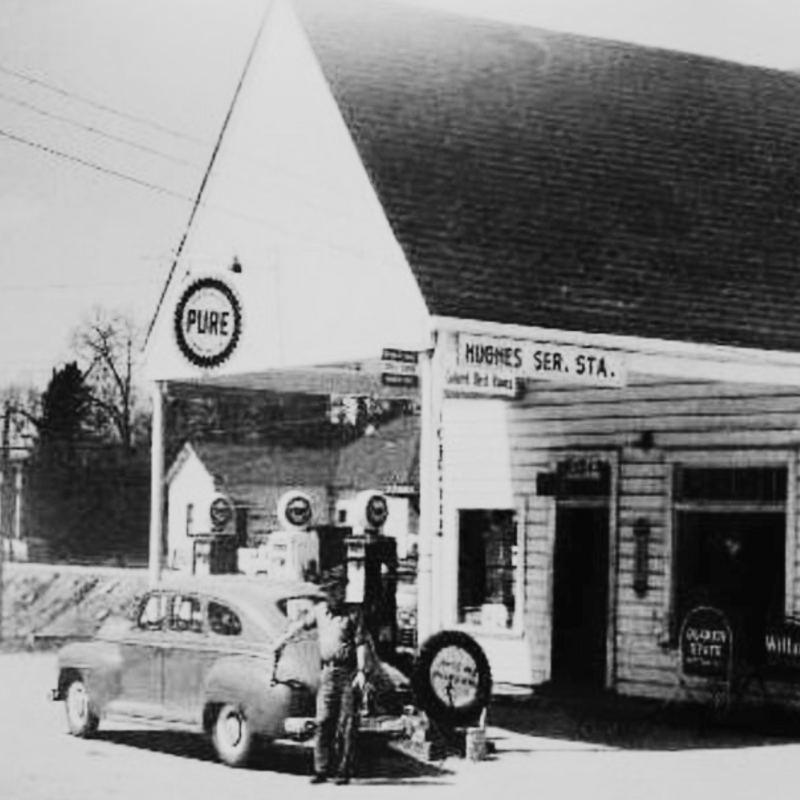
Pure Oil Gas Station
4628 South Main St
Georgia, as the home of several early interstate highways, including the Dixie Highway, had its franchised businesses along those routes that used standardized architectural plans. The Pure Oil Company built standardized service stations in the late 1920s and early 1930s. Self-trained architect Carl Petersen designed the Pure Oil station, with an eye-catching white English-cottage motif, blue trim and steeply pitched blue porcelain enamel tile roofs. This station served residents and travelers alike in the early 20th century.
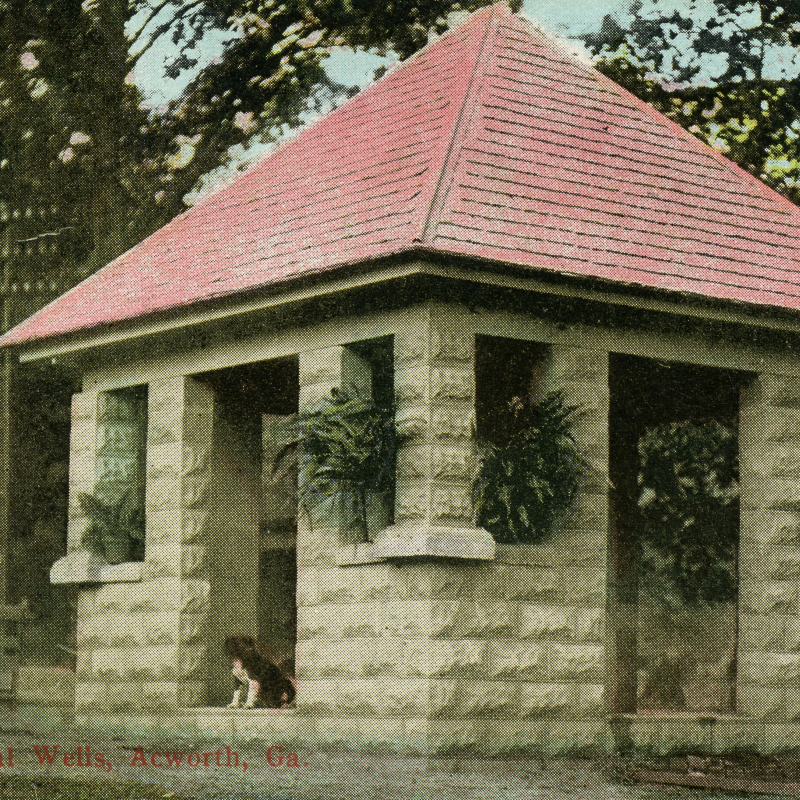
Normal School and Mineral Well
Park St
In the 1880s, Acworth residents built a well on this site to collect mineral-rich waters. The well was “located in an elegant grove of tall oaks within a few yards of the railroad,” reported the Kennesaw Gazette. “The whole landscape is picturesque and attractive. This mineral well attracted tourists seeking health benefits from the water, which were advertised in newspapers such as the Acworth Mineral Post starting in 1888. Tourists stayed at the Mineral Park House, which was built to accommodate the influx of visitors. The well later fell out of use and deteriorated over the next three decades, but it was rediscovered during construction of the Cobb Exchange Bank in 1973. Park Street derives its name from the park that once surrounded the mineral well. Located “within a stone’s throw” of the mineral well was an independent normal school founded by N.E.W. Stokely in 1889. Designed for young adults seeking specialized training, the school offered courses in penmanship, bookkeeping, typewriting, telegraphy, and photography. According to the Marietta Journal, the school had “competent teachers for each department [and] rates of tuition and board lower than any other school of its kind in the state.” Following internal disagreements and legal trouble among staff, the school struggled and ultimately closed in 1894.
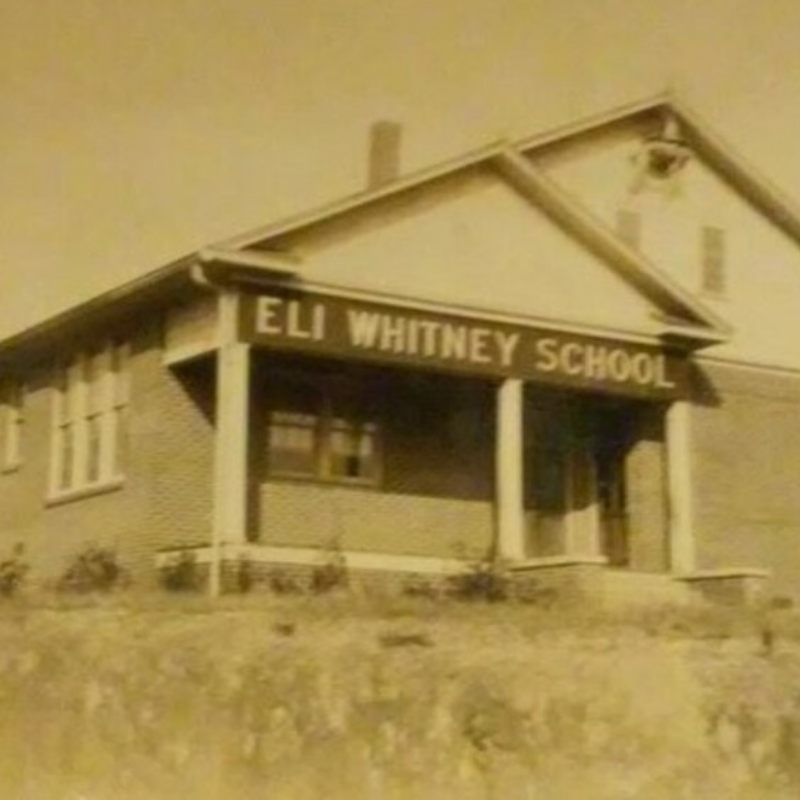
Eli Whitney School
4424 South Main St
The Eli Whitney School served the Acworth Mill Village children from 1928 until 1947 as part of the Cobb County school system. This interior photo depicts one of the 1930s classrooms complete with a coal-burning stove. After 1947, the school was used as a community house for the mill village.
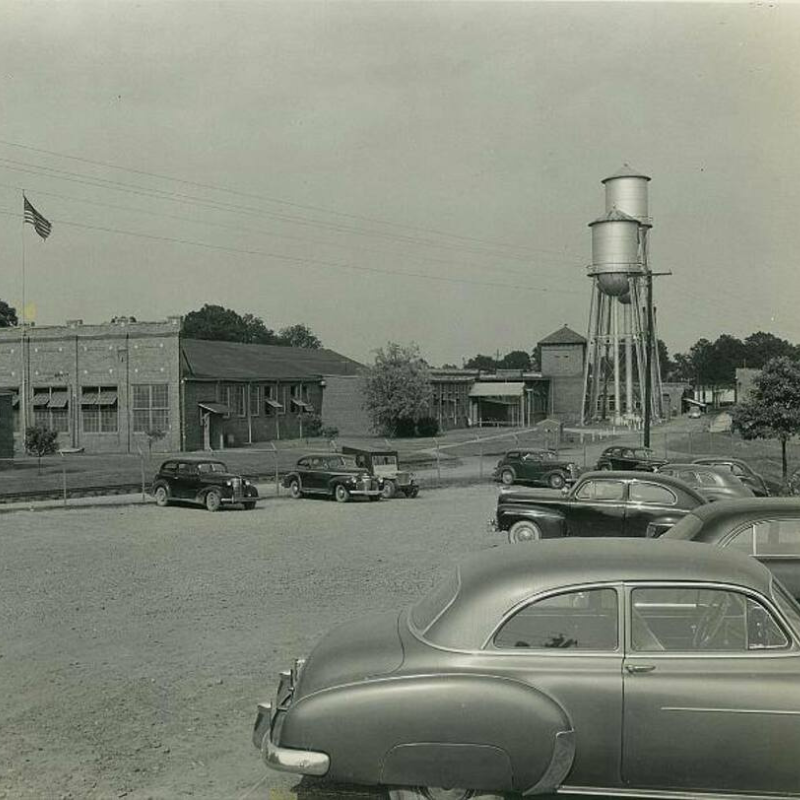
Mill Village
Mill Village
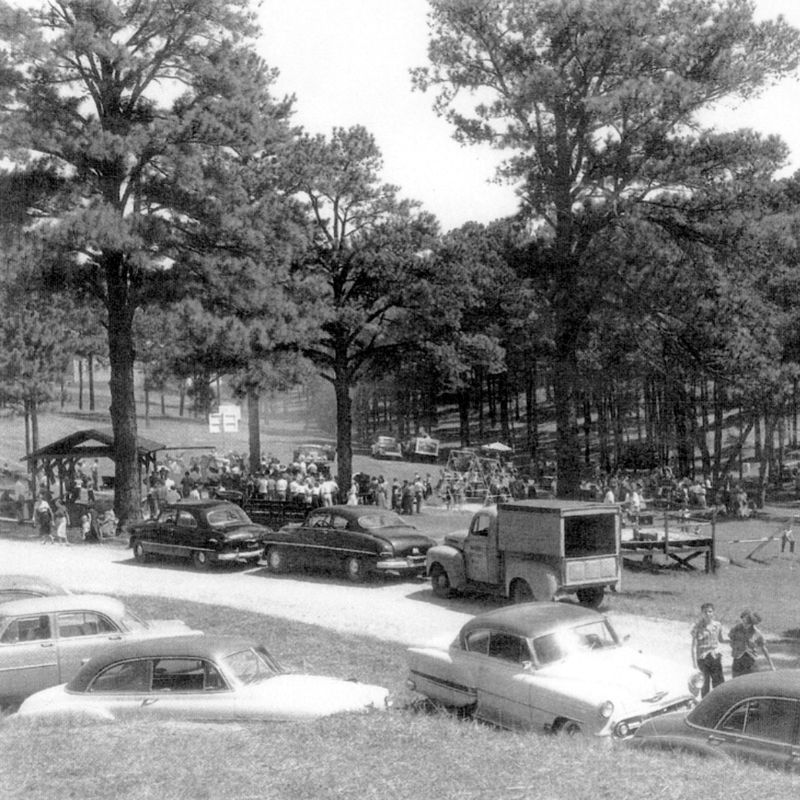
Orlando Awtrey founded the Acworth Cotton Manufacturing Company in 1905 on the Kitchen farm. The mill originally produced cotton yarns. With the fashion change from cotton to silk stockings in the 1920s, the mill modified its product. Helen and Esther Sill, two sisters from Connecticut, purchased the mill, invested capital and manufactured coarse sheetings: tobacco shadecloth, osnaburg and sacks. Their company, Acworth Mills, employed 200 people. It also provided a whole village for its workers, including homes, a company store, a church and the Eli Whitney School. Acworth Mills was sold to the Clark Thread Company. Clark (later Coats and Clark) employed as many as 300 local residents. The mill closed in the 1980s due to foreign textile competition and the lack of sufficient skilled labor. Much of the historic fabric of the mill is still visible, including brick buildings, windows. When the Clark Thread Company bought the mill in 1947, it established the village ballfields adjacent to Main Street and made improvements in the housing, streets and utilities. The company also sponsored an annual picnic for the entire Acworth community. The Mill Village encompasses about 55 homes on 54 acres on Thomasville, Clarkdale, and Toccoa Drives. In the 1920s, a mill home rented for 50 cents a week, which included water, sewer, and garbage service. There were four styles of homes from most common to least: pyramidal (often a duplex), side-gabled, gabled-ell, and shotgun (shown here). The mill homes were sold to private owners in late 1960s. The Mill Village houses were originally constructed with brick pier foundations, wood clapboard siding, and standing-seam metal roofs. Coats and Clark renovated the houses in the late 1940s or early 1950s. The open foundations were filled with concrete block, the roofs were changed to asphalt shingle, and the clapboard was replaced with asbestos siding. The form of many of the homes remains unchanged today.